
Phase 1 Countries – Botswana, Lesotho, Namibia, Eswatini
Phase 1 of Go Together will involve four countries: Botswana, Lesotho, Namibia, and Eswatini. In terms of cancer care and prevention, these four countries face similar challenges and have a lot in common:
- All have young academic institutions with limited medical and subspeciality training in Botswana, Eswatini, and Namibia and no medical or specialty training in Lesotho.
- In the two countries with medical or nursing training, the oncology curriculum is not addressed in undergraduate training nor in allied nursing programs, nor does there exist specialist training in oncology (Karim et al., 2021)
- In these four countries, there is an extreme shortage of skilled workforce in clinical oncology, radiation oncology, oncology nursing, pathology oncology pharmacy, and surgical sub-specialties. In fact, for the public sector healthcare workers in each country, there is often only one local oncologist or one formally trained oncology nurse in the entire country, if any at all. Oncology pharmacists are rare, and pathology is dramatically understaffed. In all four countries, those taking care of oncology patients are hardworking professionals, and many times, they are “learning on the job.” (Cufer et al., 2021)
- Furthermore, in these four countries, there is a low index of suspicion concerning cancer among both the general healthcare workers and the general population.
- The region faces the main challenge of late clinical cancer presentation. (Bray, et al., 2021, 2022)
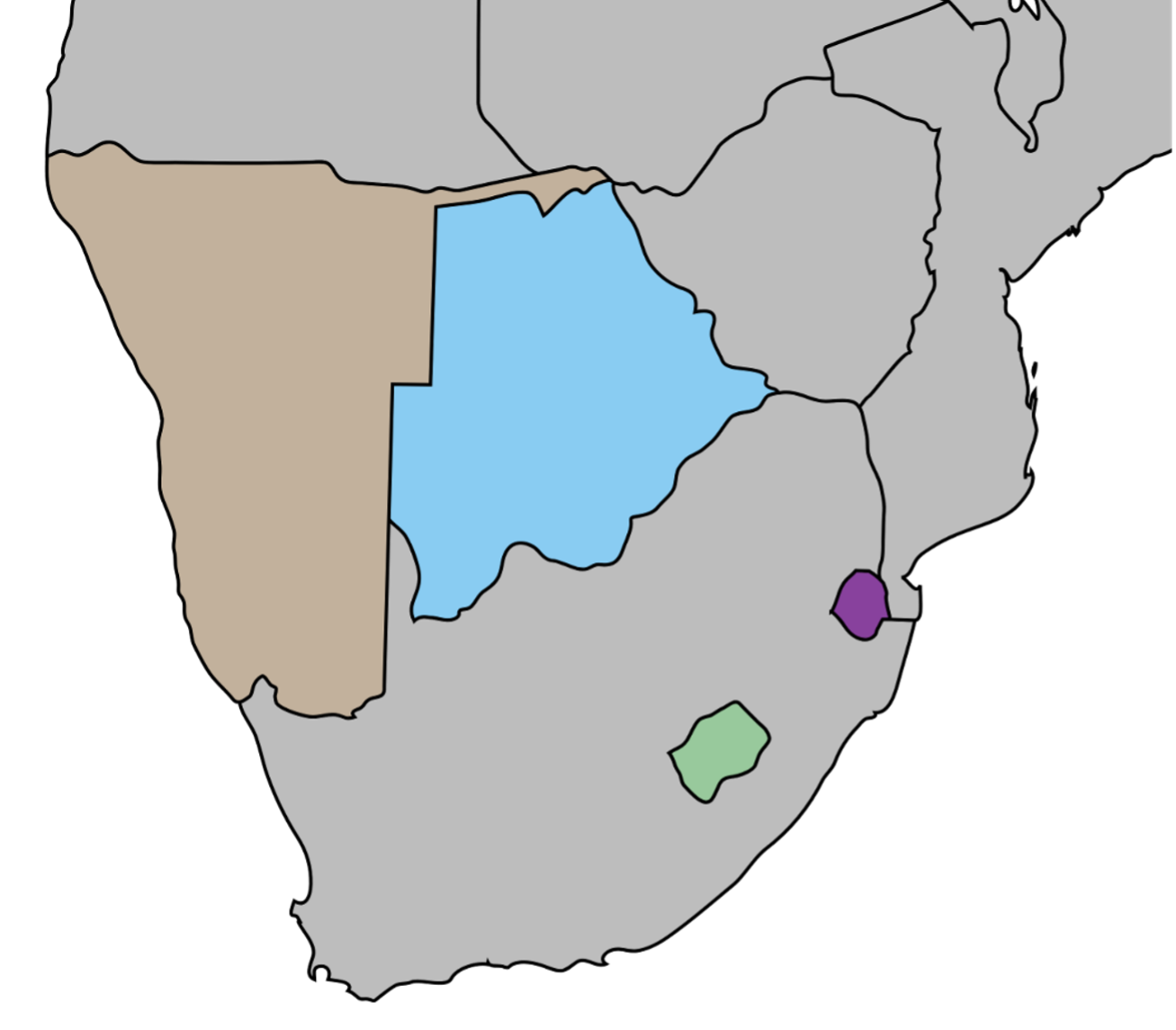
In terms of the Rutgers Global Health Institute and the Botswana Rutgers Partnership for Health, we have firm partnerships in training with two of the four countries. We are developing partnerships with the leadership institutions and the ministries of health in the other two countries.
Partnerships with the Namibian Ministry of Health and Social Services, the University of Namibia Faculty of Health Sciences (Schools of Medicine, Nursing, Public Health, and Pharmacy), and the Cancer Association of Namibia are possible with immediate and available training sites. Using lessons learned in Botswana and approaches to work closely with the Ministry of Health and Social Services of the Government of Namibia, Go Together activities could be expanded to Namibia without delay. Following an introduction from the Minister of Health in Eswatini, the next step will be to initiate talks with Eswatini healthcare leaders as we have done in Lesotho and Namibia.
Beyond the Botswana Secretariat office, the other partner countries may also decide to create local Go Together team offices, depending on each country’s activity. The alliance membership and each host government will jointly determine whether a team office is necessary and possible.
To further cultivate these partnerships and establish additional partnerships, we will use a systematic framework and a collaborative process that engages various industries and stakeholders from each country. This framework will be comprised of mapping stakeholders, devising engagement strategies, conducting rapid needs assessments, organizing exploratory meetings, identifying shared benefits of collaboration, establishing partnership agreements, and engaging in collaborative planning between the Secretariat Office, alliance members, and country-specific stakeholders.
Future Expansion – Phase 2 & 3
Phase 2 of Go Together will involve adding four more countries in sub-Saharan Africa after the success of Phase 1. Phase 3 will then involve four more countries. The lessons learned from Phase 1 will guide the rollout of the subsequent phases, bringing the Go Together Alliance to 12 countries after Phase 3.
 Go Together